
Implant-Supported Dentures in Flint, MI
Secure a full arch of teeth with dentures anchored to dental implants for stable, natural function.
.png)
What are Implant-Supported Dentures?
Standard dentures rest directly on the gum tissue and rely on suction or adhesive to stay in place. Implant-supported dentures attach to titanium posts anchored in the jawbone, so the fit is far more stable. You get the full coverage of a denture without the slipping, sore spots, or adhesive mess that often comes with traditional options.
At C. Patrick Gray, DDS. in Flint, MI, we offer both fixed and removable versions. Fixed implant-supported dentures stay in at all times and can only be removed in our office. Removable versions snap onto the implants securely and can be taken out for cleaning. Both types preserve the jawbone better than conventional dentures, because the implants provide the stimulation bone needs to stay healthy.
Benefits of Implant-Supported Dentures
Implant-supported dentures solve the problems that hold traditional denture wearers back from eating, laughing, and living without a second thought.

Bite Into Real Food Again
Corn on the cob, apples, steak. Implants anchor your denture directly to bone, so you get back real chewing force instead of tiptoeing around tough foods at every single meal.

No Adhesives, No Shifting
The denture clips directly onto implant posts set in your jaw. It will not drift when you talk, laugh, or sneeze. You can finally stop buying adhesive paste and powders for good.

Keeps Your Jawbone Intact
After tooth loss, bone shrinks over time and changes the shape of your face. Implants stimulate the jaw the way natural roots do, slowing that bone loss steadily year after year.




Bite Into Real Food Again
Corn on the cob, apples, steak. Implants anchor your denture directly to bone, so you get back real chewing force instead of tiptoeing around tough foods at every single meal.
No Adhesives, No Shifting
The denture clips directly onto implant posts set in your jaw. It will not drift when you talk, laugh, or sneeze. You can finally stop buying adhesive paste and powders for good.

Keeps Your Jawbone Intact
After tooth loss, bone shrinks over time and changes the shape of your face. Implants stimulate the jaw the way natural roots do, slowing that bone loss steadily year after year.

Who Benefits from Implant-Supported Dentures?
.png)
If you are already wearing dentures that shift when you eat or talk, implant-supported dentures give you the same coverage with a foundation that stays put. Most adults who are good candidates for dental implants can qualify, including patients who have been missing teeth for years.
We also see patients in Flint, MI who are having full extractions and want to transition directly to implant-supported dentures rather than going through conventional dentures first. A full exam and imaging let us assess bone density and map out the best placement before any surgery begins. Even patients with some bone loss may still qualify, especially if bone grafting is an option to rebuild the area.
Advanced Implant-Supported Dentures Technology
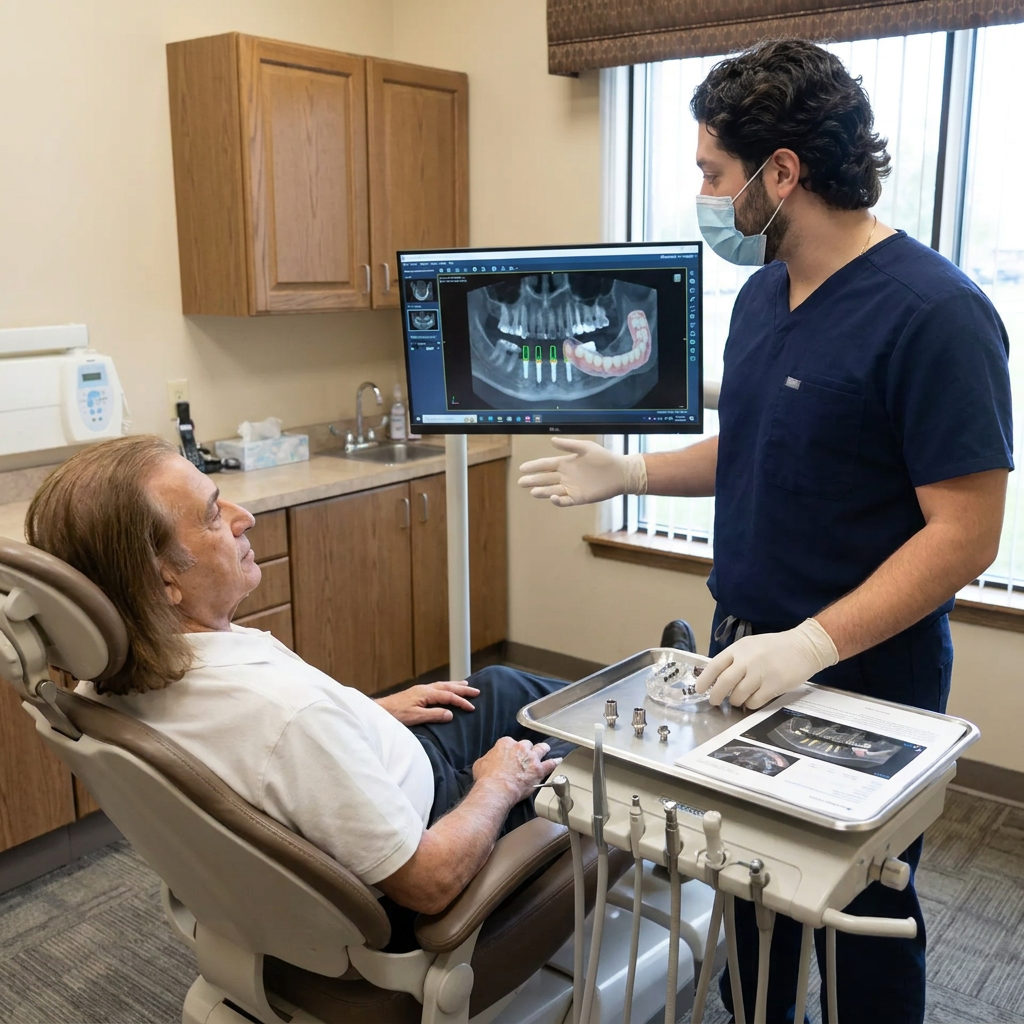
We use cone-beam 3D imaging to map your jawbone density and nerve pathways before placing a single implant. That scan lets us plan each post's angle and depth on screen, then transfer the plan to a surgical guide that fits over your gums. Guided placement like this keeps incisions smaller and healing times shorter than freehand approaches.
The denture framework itself has changed, too. Milled titanium or zirconia bars replace the older cast-metal substructures, and the fit is precise enough that you won't feel rocking or clicking. We verify the framework digitally before your final teeth are set, so adjustments happen in the design phase rather than in your mouth. Most patients notice the difference the first time they chew something firm.
What to Expect During Your Visit
The process starts with a thorough exam and digital scans so we can map out exactly where the implants will go. On placement day, we use local anesthesia (and sedation if you prefer) so you stay comfortable the entire time. We place four to six implants into the jawbone at precise angles, then attach a temporary set of teeth before you leave. Most patients walk out the same day with a full, functional smile.
Your gums and bone need a few months to fuse securely around the implants, and we check your progress at regular follow-ups during that window. Some soreness and swelling in the first week is normal and usually manageable. Once healing is complete, we swap the temporary teeth for your permanent set, custom-shaped and shaded to look natural.
Before Appointment
Eat a solid meal two hours before your appointment, since implant placement may limit chewing for the rest of the day.
Bring a list of every medication you take, including blood thinners or supplements, so we can plan your implant surgery safely.
Arrange a ride home ahead of time if sedation is part of your implant-supported denture treatment plan.
After Appointment
Rinse gently with warm salt water after meals for the first week to keep the surgical sites around your implants clean.
Stick to soft foods like mashed potatoes, smoothies, and scrambled eggs for at least two weeks while the implants begin to integrate.
Hold off on removing or adjusting your new denture on your own. Let us check the fit at your follow-up before making changes.
Frequently Asked Questions
We’ve answered the most frequently asked questions to help you feel informed, prepared, and confident before your appointment.
How long do implant-supported dentures typically last?
+The implants themselves can last a lifetime with proper care. The denture attachment usually needs replacing every 10 to 15 years due to normal wear, though we see many go longer with consistent maintenance visits.
Can I eat steak and crunchy foods with implant-supported dentures?
+Yes. Because the denture locks onto implants anchored in your jawbone, you get real biting force back. Most of our patients eat apples, corn on the cob, and grilled meats without a second thought.
How are implant-supported dentures different from traditional dentures?
+Traditional dentures rest on your gums and rely on suction or adhesive. Implant-supported dentures snap or screw onto posts set in the bone, so they don't shift, slip, or require messy adhesive pastes.
Will implant-supported dentures stop my jawbone from shrinking?
+They do. When teeth are missing, the jawbone gradually loses density because it has nothing to stimulate it. Implants act like tooth roots, transferring chewing pressure into the bone and slowing that loss significantly.
How often do I need follow-up visits after getting them?
+We typically schedule checkups every six months, similar to natural teeth. During those visits, we check the implants, clean around the attachments, and inspect the denture for wear so small issues get caught early.

What Our Patients Say
Hear from real patients about their experience at C. Patrick Gray, DDS.
This office genuinely cares about their patients. I came in anxious and left feeling completely at ease. Everyone from the front desk to the hygienist to Dr. Kroni was warm, professional, and thorough. The office is clean and modern and I never felt like I was being rushed or oversold on anything. Five stars without hesitation.
Crystal H.
Had my wisdom teeth removed here and honestly it was way less stressful than I expected. The team checked in on me throughout the whole procedure and made sure I was comfortable before they started. Dr. Khaddor was calm and efficient and recovery was smooth. Really glad I chose C. Patrick Gray, DDS.
Kayla S.
C. Patrick Gray, DDS. was the first dentist office I have been to that actually took the time to listen. I have always been anxious about dental work and Dr. Kroni was so patient with me every step of the way. He saved two teeth other dentists told me to pull. I walked out with my confidence back. Cannot recommend them enough.
Melissa P.
I love that I can get everything done in one place. Had a cleaning, a filling, and a whitening consultation all within a few weeks without being shuffled around. Dr. Khaddor is genuinely one of the best dentists I have ever had. The whole team is warm and the office feels really welcoming.
Simone R.
I have been coming to C. Patrick Gray, DDS. for two years now and the consistency is what keeps me coming back. Same friendly faces, same thorough exams, and they always remember details from my last visit. Dr. Kroni is professional, knowledgeable, and never makes me feel rushed. Great practice.
Joshua A.
Switched to C. Patrick Gray, DDS. after moving to the Flint area and I am so glad I did. They went over my insurance up front so there were no surprises, and Dr. Kroni took the time to actually listen to my concerns instead of rushing through. Highly recommend if you are looking for a dentist who treats you like a person.
Sarah F.
Brought my two kids in for their first cleanings and the staff was wonderful with both of them. They explained each step so the kids knew what was coming and made the whole thing feel like a fun trip rather than a dental appointment. The office is clean, easy to find on Beecher Rd, and we always get in right on time.
Hubert H.
I had been putting off a crown for months because I was nervous. Dr. Khaddor took the time to explain everything before we started and made sure I was comfortable the entire time. The result looks completely natural and I have had zero issues since. I appreciate how honest the team is about what you actually need.
Jill J.
Dr. Kroni and Dr. Khaddor make every visit feel easy. They walked me through my treatment options without any pressure and answered every question I had. The whole team is friendly and the office runs on time. My family has been coming here for years and we would not go anywhere else.
Aaron D.
Stay Informed with Expert Insights & Tips About Dental Care

No Blog Posts Yet
We're working on new articles to help you care for your smile.
Check back soon for updates from C. Patrick Gray, DDS.
Schedule Your Appointment
Ready to take the next step? Contact C. Patrick Gray, DDS. in Flint to book your visit.
-
When You Can Visit
Monday: 8:00 AM – 5:00 PM
Tuesday: 8:00 AM – 5:00 PM
Wednesday: 8:00 AM – 5:00 PM
Thursday: 8:00 AM – 5:00 PM
Friday: 8:00 AM – 2:00 PM
Saturday: Closed
Sunday: Closed
- (810) 732-0200
Speak With Our Team
- G3222 Beecher Rd, Flint, MI 48532
Find Us Here

Thank you for booking your appointment!
We've received your request and will contact you soon to confirm the details. We look forward to seeing you at C. Patrick Gray, DDS.