
Tooth Extractions in Flint, MI
Remove damaged or problematic teeth safely so your mouth can heal and your smile can move forward.
.png)
What are Tooth Extractions?
Sometimes a tooth reaches a point where saving it just isn't realistic. Deep decay, a crack that runs below the gumline, or crowding that blocks other teeth from coming in properly can all lead to the same conclusion: the tooth needs to come out. A tooth extraction removes the problem at its source so the rest of your mouth can stay healthy.
At C. Patrick Gray, DDS., we start every extraction case with a thorough exam and x-rays so we know exactly what we're working with before anything begins. Most simple extractions in our Flint, MI office take less than 30 minutes. We numb the area completely, loosen the tooth with careful rocking motions, and lift it out. You feel pressure, not pain. Afterward, a blood clot forms in the socket, and healing typically wraps up within one to two weeks.
Benefits of Tooth Extractions
A tooth extraction removes the source of your discomfort and gives the surrounding teeth room to stay healthy long term.

Pain Gone the Same Day
A tooth that has been throbbing for weeks or months stops hurting once it is out. Most patients feel real relief within hours, and over-the-counter pain relief handles the aftercare.

Guard the Teeth Around It
A badly damaged or infected tooth can spread problems to the teeth around it. Removing it early protects neighboring teeth from the decay, shifting, and bone loss that so often follows.

Healing Happens in Days
Most extraction sites close over within a week. You can usually eat soft foods the following day and return to normal eating within seven to ten days as the socket heals up steadily.




Pain Gone the Same Day
A tooth that has been throbbing for weeks or months stops hurting once it is out. Most patients feel real relief within hours, and over-the-counter pain relief handles the aftercare.
Guard the Teeth Around It
A badly damaged or infected tooth can spread problems to the teeth around it. Removing it early protects neighboring teeth from the decay, shifting, and bone loss that so often follows.

Healing Happens in Days
Most extraction sites close over within a week. You can usually eat soft foods the following day and return to normal eating within seven to ten days as the socket heals up steadily.

When a Tooth Needs to Come Out
.png)
Sometimes a tooth reaches a point where saving it just isn't realistic. Maybe you've been dealing with a deep crack that keeps flaring up, or an infection has worked its way too far into the root. Severe decay that has hollowed out most of the tooth structure is another common reason we recommend extraction. Teens and adults in their early twenties often need wisdom teeth removed before crowding or impaction causes bigger problems down the road.
Gum disease can also loosen teeth over time, and once the bone support is gone, extraction may be the healthiest path forward. We sometimes remove a tooth to clear the way for orthodontic treatment or to address a fracture below the gumline. During your exam and x-rays, we evaluate exactly what's happening and walk you through every option before anything is decided.
Advanced Tooth Extractions Technology
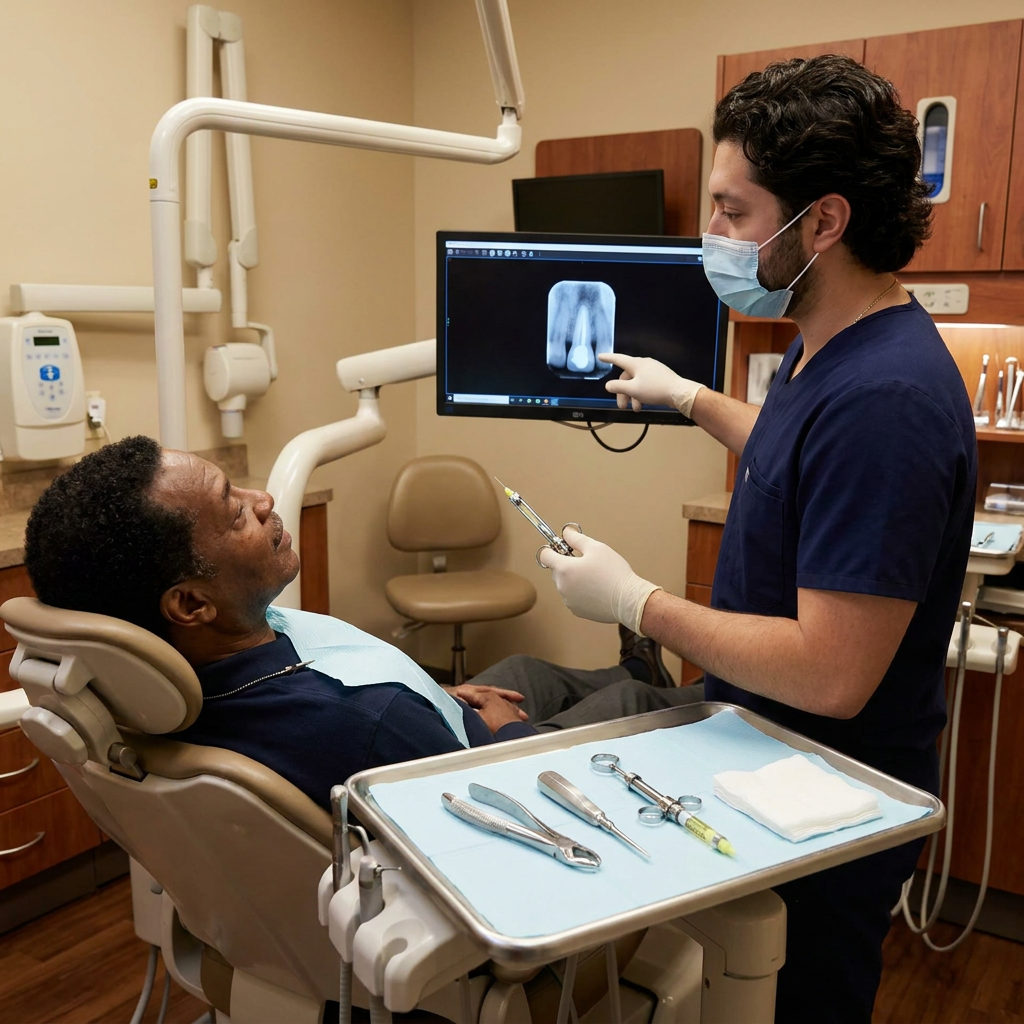
Digital x-rays give us a detailed look at root shape, bone density, and the position of nearby nerves before we make a single move. The images load in seconds and expose you to roughly 80 percent less radiation than traditional film. For teeth that are impacted or sitting close to a sinus cavity, a 3D cone beam scan lets us plan the approach from every angle.
The instruments themselves have changed, too. Modern extraction elevators and forceps are designed with narrower tips that grip the tooth more precisely while disturbing less surrounding bone. That means smaller openings, less post-op swelling, and faster recovery. We also use absorbable sutures when stitches are needed, so you skip the extra visit to have them removed. The whole process is quicker and more controlled than it was even a decade ago.
What to Expect During Your Visit
We start by numbing the area around the tooth, so you feel pressure but not pain. Once you're comfortable, we loosen the tooth gently within its socket before removing it. Some teeth come out in under a minute. Others, especially those that are broken or impacted, take a bit more work, but we keep you informed through every step. Most single extractions wrap up in about 20 to 30 minutes.
Afterward, we place gauze over the site and give you clear instructions for the next few days. A blood clot forms in the socket within hours, and that clot is key to smooth healing. Most patients manage well with over-the-counter relief and soft foods for two to three days. We follow up to make sure the area is healing on track.
Before Appointment
Eat a solid meal about two hours before your extraction, since you won't be able to chew comfortably for a while afterward.
Mention any blood thinners, aspirin, or supplements you take so we can plan around your bleeding risk during the extraction.
Arrange a ride home if we've discussed sedation, and wear a short-sleeved shirt for easy access if an IV is needed.
After Appointment
Bite down on the gauze pad for 30 to 45 minutes after leaving, and replace it if bleeding continues beyond that.
Skip using a straw, spitting, or rinsing for the first 24 hours so the blood clot stays firmly in the socket.
Brush your other teeth normally that night, but steer clear of the extraction site for at least two full days.
Frequently Asked Questions
We’ve answered the most frequently asked questions to help you feel informed, prepared, and confident before your appointment.
How soon can I eat normally after a tooth extraction?
+Most people return to normal eating within five to seven days. Soft foods work best for the first two or three days, and you can gradually add firmer items as the site feels comfortable.
Can a tooth extraction affect nearby teeth over time?
+When a tooth is removed, neighboring teeth can slowly shift into the gap. We typically discuss replacement options like a bridge or implant to keep your bite aligned and prevent long-term movement.
Is a tooth extraction safe during pregnancy?
+Extractions can be performed during pregnancy when necessary, usually in the second trimester. We coordinate with your OB-GYN and choose medications that are safe for both you and your baby.
How do I know if I need a tooth extraction or a root canal?
+It depends on how much healthy tooth structure remains. If the root and surrounding bone can still support the tooth, saving it is usually the better path. When damage is too extensive, removal prevents infection from spreading.
What happens if I delay a tooth extraction that's been recommended?
+Waiting can allow infection to spread to the bone or adjacent teeth. A delayed extraction may also lead to increased pain, swelling, and a more involved procedure later. Early treatment usually means a simpler recovery.

What Our Patients Say
Hear from real patients about their experience at C. Patrick Gray, DDS.
This office genuinely cares about their patients. I came in anxious and left feeling completely at ease. Everyone from the front desk to the hygienist to Dr. Kroni was warm, professional, and thorough. The office is clean and modern and I never felt like I was being rushed or oversold on anything. Five stars without hesitation.
Crystal H.
Had my wisdom teeth removed here and honestly it was way less stressful than I expected. The team checked in on me throughout the whole procedure and made sure I was comfortable before they started. Dr. Khaddor was calm and efficient and recovery was smooth. Really glad I chose C. Patrick Gray, DDS.
Kayla S.
C. Patrick Gray, DDS. was the first dentist office I have been to that actually took the time to listen. I have always been anxious about dental work and Dr. Kroni was so patient with me every step of the way. He saved two teeth other dentists told me to pull. I walked out with my confidence back. Cannot recommend them enough.
Melissa P.
I love that I can get everything done in one place. Had a cleaning, a filling, and a whitening consultation all within a few weeks without being shuffled around. Dr. Khaddor is genuinely one of the best dentists I have ever had. The whole team is warm and the office feels really welcoming.
Simone R.
I have been coming to C. Patrick Gray, DDS. for two years now and the consistency is what keeps me coming back. Same friendly faces, same thorough exams, and they always remember details from my last visit. Dr. Kroni is professional, knowledgeable, and never makes me feel rushed. Great practice.
Joshua A.
Switched to C. Patrick Gray, DDS. after moving to the Flint area and I am so glad I did. They went over my insurance up front so there were no surprises, and Dr. Kroni took the time to actually listen to my concerns instead of rushing through. Highly recommend if you are looking for a dentist who treats you like a person.
Sarah F.
Brought my two kids in for their first cleanings and the staff was wonderful with both of them. They explained each step so the kids knew what was coming and made the whole thing feel like a fun trip rather than a dental appointment. The office is clean, easy to find on Beecher Rd, and we always get in right on time.
Hubert H.
I had been putting off a crown for months because I was nervous. Dr. Khaddor took the time to explain everything before we started and made sure I was comfortable the entire time. The result looks completely natural and I have had zero issues since. I appreciate how honest the team is about what you actually need.
Jill J.
Dr. Kroni and Dr. Khaddor make every visit feel easy. They walked me through my treatment options without any pressure and answered every question I had. The whole team is friendly and the office runs on time. My family has been coming here for years and we would not go anywhere else.
Aaron D.
Stay Informed with Expert Insights & Tips About Dental Care

No Blog Posts Yet
We're working on new articles to help you care for your smile.
Check back soon for updates from C. Patrick Gray, DDS.
Schedule Your Appointment
Ready to take the next step? Contact C. Patrick Gray, DDS. in Flint to book your visit.
-
When You Can Visit
Monday: 8:00 AM – 5:00 PM
Tuesday: 8:00 AM – 5:00 PM
Wednesday: 8:00 AM – 5:00 PM
Thursday: 8:00 AM – 5:00 PM
Friday: 8:00 AM – 2:00 PM
Saturday: Closed
Sunday: Closed
- (810) 732-0200
Speak With Our Team
- G3222 Beecher Rd, Flint, MI 48532
Find Us Here

Thank you for booking your appointment!
We've received your request and will contact you soon to confirm the details. We look forward to seeing you at C. Patrick Gray, DDS.