
Root Canal Therapy in Flint, MI
Save a damaged or infected tooth with root canal therapy that relieves pain and restores normal function.
What is Root Canal Therapy?
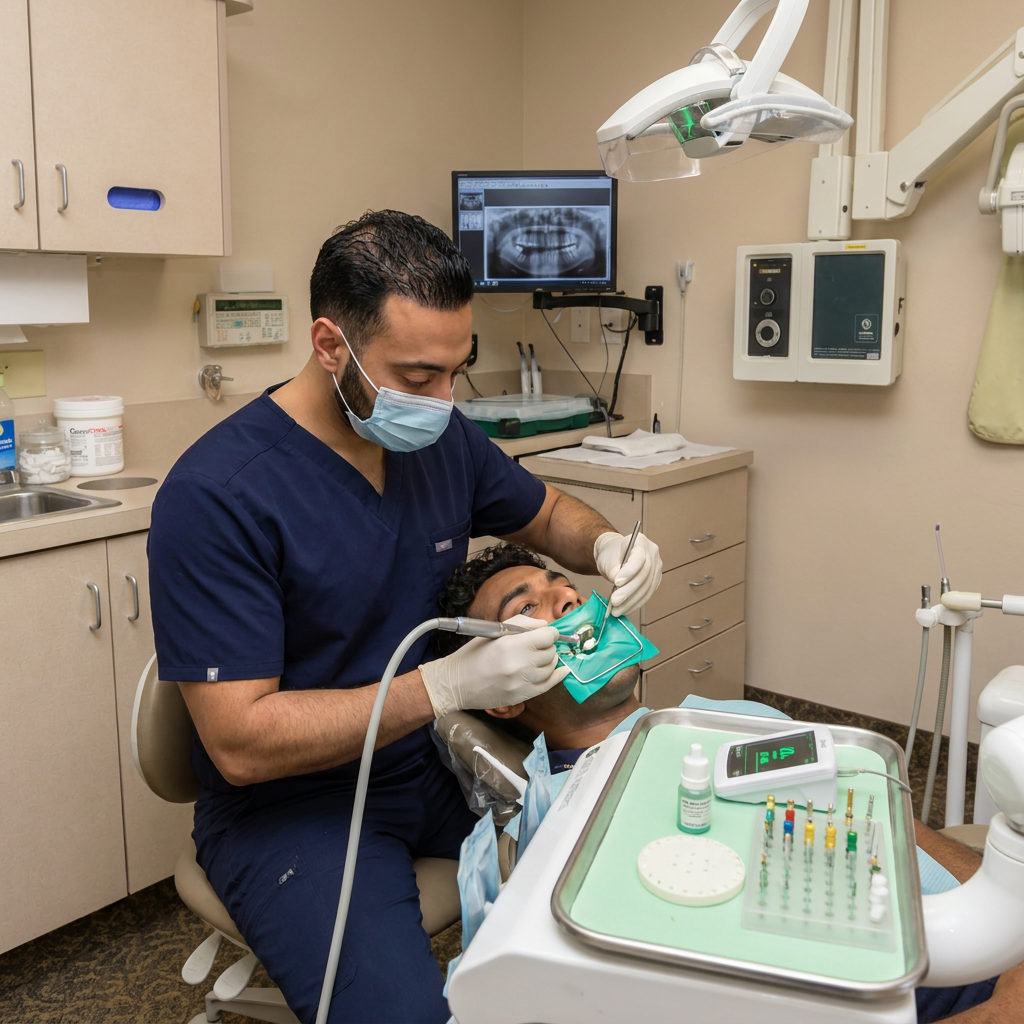
The pulp is the soft tissue inside your tooth that contains nerves and blood vessels. It is essential while the tooth is developing, but once a tooth is fully grown, it can survive without it. When bacteria reach the pulp through a deep cavity, a crack, or repeated dental work, an infection develops. Root canal therapy removes the infected pulp, cleans the canals, seals the tooth, and covers it with a crown so it functions like any other tooth.
Without treatment, the infection spreads. It can cause a painful abscess, damage the surrounding bone, or force us to remove the tooth entirely. A filling cannot fix a pulp infection. Root canal therapy is the only way to save a tooth once the nerve has been affected, and at C. Patrick Gray, DDS. in Flint, MI, we complete most cases in one or two visits with very little discomfort.
Benefits of Root Canal Therapy
Root canal therapy does more than stop the pain. It lets you hold on to a tooth your body still needs.

Natural Tooth Stays Saved
Nothing bites or fits quite like the tooth you were born with. A root canal removes the infection without removing the tooth, so your original structure stays in your mouth for years.

Pain Relief the Same Day
Most patients walk out feeling better than they walked in. Once the infected pulp is removed, the throbbing stops. Most soreness fades within a day or two after the appointment.

Keep the Tooth, Skip a Gap
Skipping treatment usually means losing the tooth entirely. A root canal stops the infection before it reaches that point, keeping a gap from opening in your smile and your bite.




Natural Tooth Stays Saved
Nothing bites or fits quite like the tooth you were born with. A root canal removes the infection without removing the tooth, so your original structure stays in your mouth for years.

Pain Relief the Same Day
Most patients walk out feeling better than they walked in. Once the infected pulp is removed, the throbbing stops. Most soreness fades within a day or two after the appointment.

Keep the Tooth, Skip a Gap
Skipping treatment usually means losing the tooth entirely. A root canal stops the infection before it reaches that point, keeping a gap from opening in your smile and your bite.

When a Root Canal Makes Sense
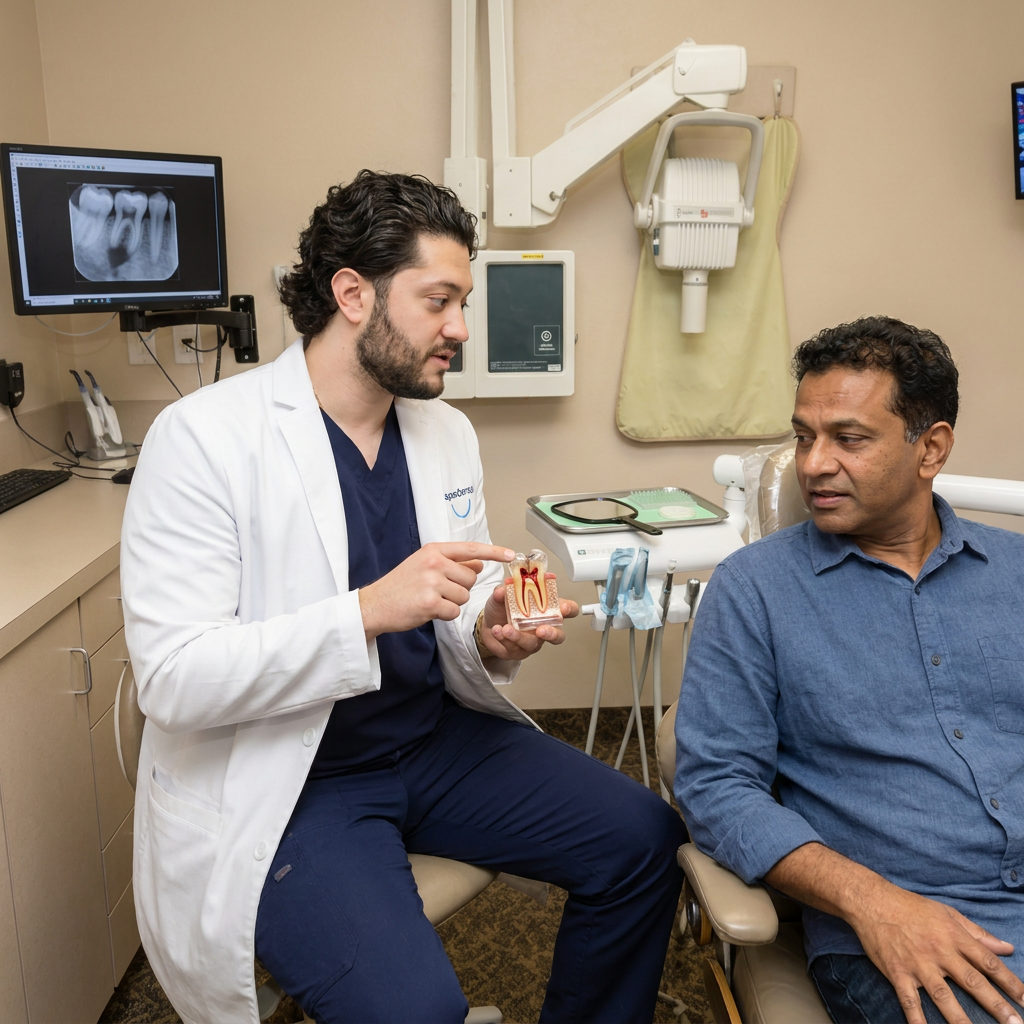
Root canal therapy is recommended when the pulp inside a tooth becomes infected or inflamed. That usually happens because decay reached the inner chamber, a crack allowed bacteria in, or an injury damaged the nerve. If you have been putting off a large filling or a crown and the tooth has been hurting more, the pulp may already be involved.
Adults of any age can need root canal therapy. Some patients come to us with pain that wakes them up at night; others have no symptoms at all and only learn about the infection from an x-ray at a routine exam. If the nerve is gone, the tooth won't hurt even though the infection is still active. Either way, treating the infection early preserves the tooth and prevents it from spreading to nearby bone or teeth.
Advanced Root Canal Therapy Technology
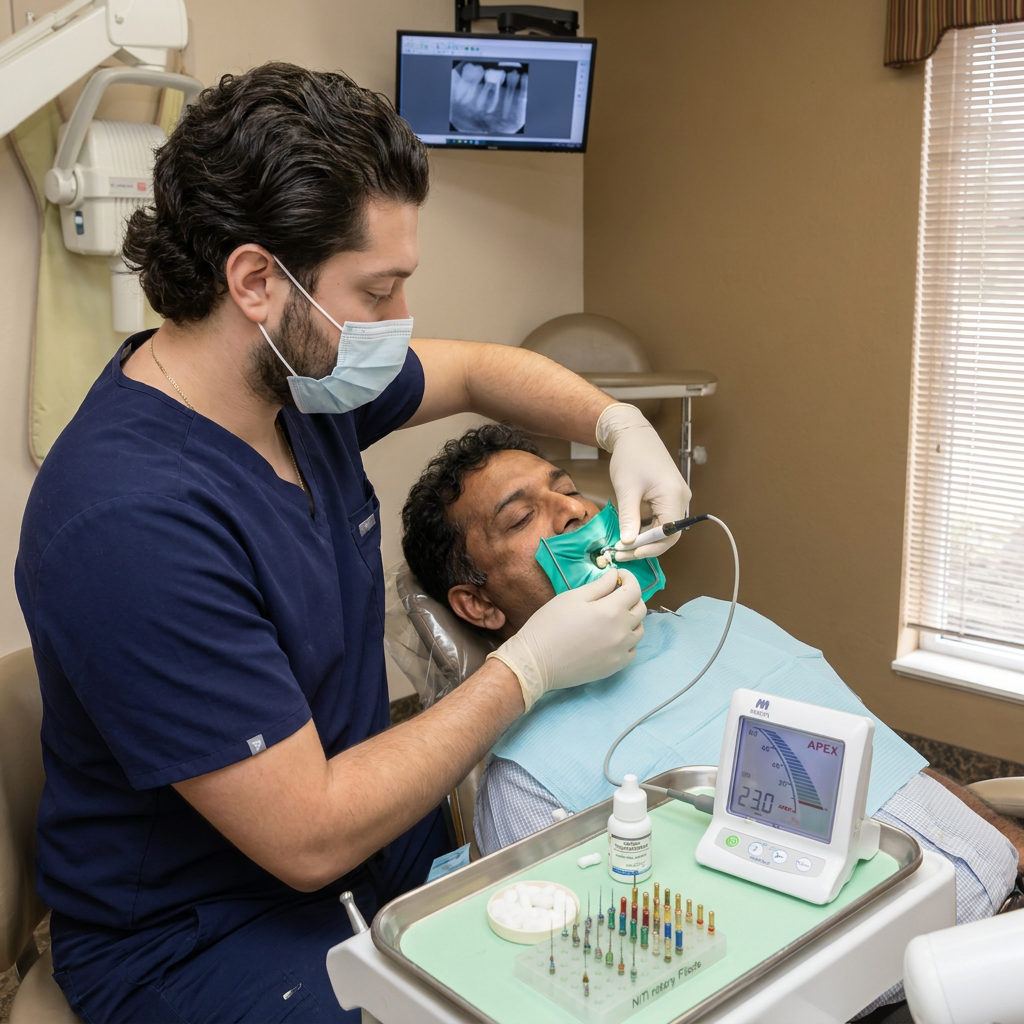
We use digital hygiene records and x-ray imaging to map each root canal before we begin. Modern digital sensors give us a sharper, more detailed image of the root tip and surrounding bone in a fraction of the radiation of older film x-rays. That detail helps us identify the number of canals, their curvature, and whether an infection has spread to the surrounding bone before we start treatment.
We also use nickel-titanium rotary instruments to clean and shape the canals. These flexible files follow the curve of the root without straining it, which reduces the risk of instrument separation and produces a cleaner canal shape than older stainless steel files. Paired with electronic apex locators that measure canal length electronically, we can complete the procedure more predictably and with fewer x-rays taken during the appointment.
What to Expect During Your Visit
We start by numbing the tooth completely, so you feel pressure but no pain throughout. Once you're comfortable, we open a small access point in the top of the tooth, remove the infected pulp, and clean each canal thoroughly with fine instruments and an antimicrobial rinse. Then we seal the canals and place a temporary or permanent filling the same day.
Most root canal appointments take about 60 to 90 minutes. The tooth may feel slightly tender for a day or two afterward, and over-the-counter pain relief handles it well for most patients. We usually recommend placing a crown over the treated tooth soon after to protect it from cracking. Once the crown is in, the tooth functions just like the ones around it.
Before Appointment
Eat a full meal about two hours before your appointment, since the numbness around the treated tooth can last several hours.
Mention any antibiotics you currently take or were prescribed before root canal therapy, so we can coordinate timing.
Skip caffeine the morning of your visit, as it can make the numbing process for a root canal less predictable.
After Appointment
Chew on the opposite side for two to three days so the treated tooth can settle under its temporary filling or crown.
Skip crunchy or sticky snacks like popcorn and caramel until your permanent restoration is placed at your follow-up visit.
Brush gently around the treated tooth tonight, but avoid flossing directly on it until any tenderness at the gum line fades.
Frequently Asked Questions
We’ve answered the most frequently asked questions to help you feel informed, prepared, and confident before your appointment.
How long does a tooth last after root canal therapy?
+Most teeth treated with root canal therapy last 10 to 15 years or longer. A tooth restored with a crown and maintained with regular checkups can often function for the rest of your life.
Is root canal therapy a better option than pulling the tooth?
+Keeping your natural tooth is almost always the stronger choice. A treated tooth preserves your jawbone and bite alignment. Removing it means you'll eventually need a bridge or implant to fill the gap.
Can I eat normally after a root canal heals?
+Once the permanent crown is placed and the area has fully healed, you can eat just about anything. Most patients in Flint, MI are back to crunching apples and chewing steak within a few weeks.
Is root canal therapy safe during pregnancy?
+It can be done safely, especially during the second trimester. We use lead aprons for any x-rays and choose anesthetics that are well studied in pregnant patients. Leaving an infection untreated carries its own risks.
How often will I need follow-up visits after root canal therapy?
+We typically see you for one follow-up about two weeks after the procedure, then check the tooth at your regular six-month exams. An occasional x-ray lets us confirm the bone around the root stays healthy over time.

What Our Patients Say
Hear from real patients about their experience at C. Patrick Gray, DDS.
This office genuinely cares about their patients. I came in anxious and left feeling completely at ease. Everyone from the front desk to the hygienist to Dr. Kroni was warm, professional, and thorough. The office is clean and modern and I never felt like I was being rushed or oversold on anything. Five stars without hesitation.
Crystal H.
Had my wisdom teeth removed here and honestly it was way less stressful than I expected. The team checked in on me throughout the whole procedure and made sure I was comfortable before they started. Dr. Khaddor was calm and efficient and recovery was smooth. Really glad I chose C. Patrick Gray, DDS.
Kayla S.
C. Patrick Gray, DDS. was the first dentist office I have been to that actually took the time to listen. I have always been anxious about dental work and Dr. Kroni was so patient with me every step of the way. He saved two teeth other dentists told me to pull. I walked out with my confidence back. Cannot recommend them enough.
Melissa P.
I love that I can get everything done in one place. Had a cleaning, a filling, and a whitening consultation all within a few weeks without being shuffled around. Dr. Khaddor is genuinely one of the best dentists I have ever had. The whole team is warm and the office feels really welcoming.
Simone R.
I have been coming to C. Patrick Gray, DDS. for two years now and the consistency is what keeps me coming back. Same friendly faces, same thorough exams, and they always remember details from my last visit. Dr. Kroni is professional, knowledgeable, and never makes me feel rushed. Great practice.
Joshua A.
Switched to C. Patrick Gray, DDS. after moving to the Flint area and I am so glad I did. They went over my insurance up front so there were no surprises, and Dr. Kroni took the time to actually listen to my concerns instead of rushing through. Highly recommend if you are looking for a dentist who treats you like a person.
Sarah F.
Brought my two kids in for their first cleanings and the staff was wonderful with both of them. They explained each step so the kids knew what was coming and made the whole thing feel like a fun trip rather than a dental appointment. The office is clean, easy to find on Beecher Rd, and we always get in right on time.
Hubert H.
I had been putting off a crown for months because I was nervous. Dr. Khaddor took the time to explain everything before we started and made sure I was comfortable the entire time. The result looks completely natural and I have had zero issues since. I appreciate how honest the team is about what you actually need.
Jill J.
Dr. Kroni and Dr. Khaddor make every visit feel easy. They walked me through my treatment options without any pressure and answered every question I had. The whole team is friendly and the office runs on time. My family has been coming here for years and we would not go anywhere else.
Aaron D.
Stay Informed with Expert Insights & Tips About Dental Care

No Blog Posts Yet
We're working on new articles to help you care for your smile.
Check back soon for updates from C. Patrick Gray, DDS.
Schedule Your Appointment
Ready to take the next step? Contact C. Patrick Gray, DDS. in Flint to book your visit.
-
When You Can Visit
Monday: 8:00 AM – 5:00 PM
Tuesday: 8:00 AM – 5:00 PM
Wednesday: 8:00 AM – 5:00 PM
Thursday: 8:00 AM – 5:00 PM
Friday: 8:00 AM – 2:00 PM
Saturday: Closed
Sunday: Closed
- (810) 732-0200
Speak With Our Team
- G3222 Beecher Rd, Flint, MI 48532
Find Us Here

Thank you for booking your appointment!
We've received your request and will contact you soon to confirm the details. We look forward to seeing you at C. Patrick Gray, DDS.