
Periodontal Treatment in Flint, MI
Treat gum disease and restore healthy tissue to protect your teeth and prevent further bone loss.
.png)
What is Periodontal Treatment?
Gums that bleed when you brush or floss are sending a signal. That pink on your toothbrush means bacteria have worked below the gumline and triggered inflammation, a condition that can quietly damage the bone holding your teeth in place. Periodontal treatment targets that hidden infection directly, clearing bacteria from pockets that a regular cleaning can't reach.
Our team at C. Patrick Gray, DDS. uses scaling and root planing to smooth the root surfaces so gum tissue can reattach snugly against the tooth. For patients in Flint, MI, catching periodontal disease early often means avoiding surgery altogether. The goal is straightforward: stop the infection, preserve bone, and keep your natural teeth where they belong.
Benefits of Periodontal Treatment
Periodontal treatment targets the infection at its source, protecting the bone and tissue that keep your teeth in place.

Keep Teeth That Feel Loose
Gum disease quietly dissolves the bone around your roots. Treating it early stops that loss so the remaining bone can stabilize and your teeth stay firmly anchored where they belong.

Fresher Breath That Lasts
Chronic bad breath often traces back to bacteria living below the gumline. Clearing those deep pockets treats the root cause, not just the surface, so the freshness holds day after day.

Less Bleeding When You Eat
Sore, puffy gums that bleed at meals are a sign of active infection. Once we clear the bacteria and the gums begin to heal, bleeding stops and daily eating stops feeling sensitive or sore.




Keep Teeth That Feel Loose
Gum disease quietly dissolves the bone around your roots. Treating it early stops that loss so the remaining bone can stabilize and your teeth stay firmly anchored where they belong.
Fresher Breath That Lasts
Chronic bad breath often traces back to bacteria living below the gumline. Clearing those deep pockets treats the root cause, not just the surface, so the freshness holds day after day.

Less Bleeding When You Eat
Sore, puffy gums that bleed at meals are a sign of active infection. Once we clear the bacteria and the gums begin to heal, bleeding stops and daily eating stops feeling sensitive or sore.

Who Needs Periodontal Treatment?
.png)
Bleeding when you brush is easy to ignore, but it's one of the earliest signs that your gums need attention. Periodontal treatment helps adults at every stage, from mild gingivitis that showed up at a routine exam to advanced bone loss that puts teeth at risk. Smokers, people with diabetes, and anyone with a family history of gum disease tend to develop problems earlier and faster.
You don't have to be in pain to qualify. Many patients in Flint, MI come to us after noticing persistent bad breath, receding gumlines, or teeth that feel slightly loose. Catching these signs early often means simpler care and better long-term results. Our team at C. Patrick Gray, DDS. can evaluate your gum health and recommend the right level of periodontal treatment, so you keep the teeth you have for as long as possible.
Advanced Periodontal Treatment Technology
.png)
Ultrasonic scalers do much of the heavy lifting during periodontal treatment today. These instruments vibrate at thousands of cycles per second, breaking apart calculus deposits with less pressure than traditional hand instruments alone. The result is a gentler experience for you and better access to deep pockets around tooth roots.
Digital x-rays let us measure bone levels with pinpoint accuracy, often revealing early loss that wouldn't show up on older film. We compare images over time to track how your bone responds after treatment. Laser-assisted therapy also allows us to reduce bacteria in infected pockets while encouraging healthy tissue to heal faster, often with less soreness afterward.
What to Expect During Your Visit
We start with a gentle exam of your gums, measuring the small pockets between each tooth and the bone. If we spot buildup below the gumline, we numb the area so you stay comfortable while we clean the root surfaces. This process, called scaling and root planing, smooths away tartar and bacteria that regular brushing can't reach. Most visits run 60 to 90 minutes depending on how many areas need attention.
Your gums may feel tender for a day or two, and mild sensitivity to hot or cold is normal. Most patients in Flint, MI are back to eating comfortably within 48 hours. We schedule a follow-up a few weeks later to check how your gum tissue is healing and whether the pocket depths have improved.
Before Appointment
Write down any spots where your gums bleed during brushing or flossing so we can focus on those areas during your evaluation.
Take any prescribed antibiotics exactly as directed if we asked you to pre-medicate before your periodontal appointment.
Hold off on aspirin or blood thinners for 48 hours before your visit, since gum tissue may need hands-on treatment.
After Appointment
Rinse gently with warm salt water two to three times a day for the first week to help your gum tissue heal after treatment.
Switch to a soft-bristled toothbrush and use light, short strokes around treated areas for at least ten days.
Hold off on crunchy or sharp foods like chips and raw carrots for five to seven days so healing gum pockets aren't irritated.
Frequently Asked Questions
We’ve answered the most frequently asked questions to help you feel informed, prepared, and confident before your appointment.
How often do I need follow-up visits after periodontal treatment?
+Most patients return every three to four months for maintenance cleanings. We adjust that schedule based on how your gums respond. Once tissue stabilizes, some patients can shift to visits every six months.
Can periodontal treatment reverse bone loss?
+Treatment stops further bone loss and gives your body a chance to heal. In some cases, we can encourage regrowth with grafting techniques. The earlier we catch it, the more bone structure we can preserve.
Is periodontal treatment safe during pregnancy?
+Yes, and it is actually important. Hormonal changes during pregnancy can worsen gum inflammation. We time treatment carefully and avoid certain procedures during the first trimester, but managing active gum disease protects both you and your baby.
Will I be able to eat normally after a deep cleaning?
+Most patients eat soft foods for a day or two, then return to their normal diet. Your gums may feel tender at first, but that fades quickly. Hot and spicy foods are the main things to skip for the first 48 hours.
What happens if I delay periodontal treatment?
+Gum disease does not stall on its own. Without treatment, bacteria keep breaking down bone and connective tissue. Teeth can loosen over time, and some may eventually need extraction. Early action gives us the most options.

What Our Patients Say
Hear from real patients about their experience at C. Patrick Gray, DDS.
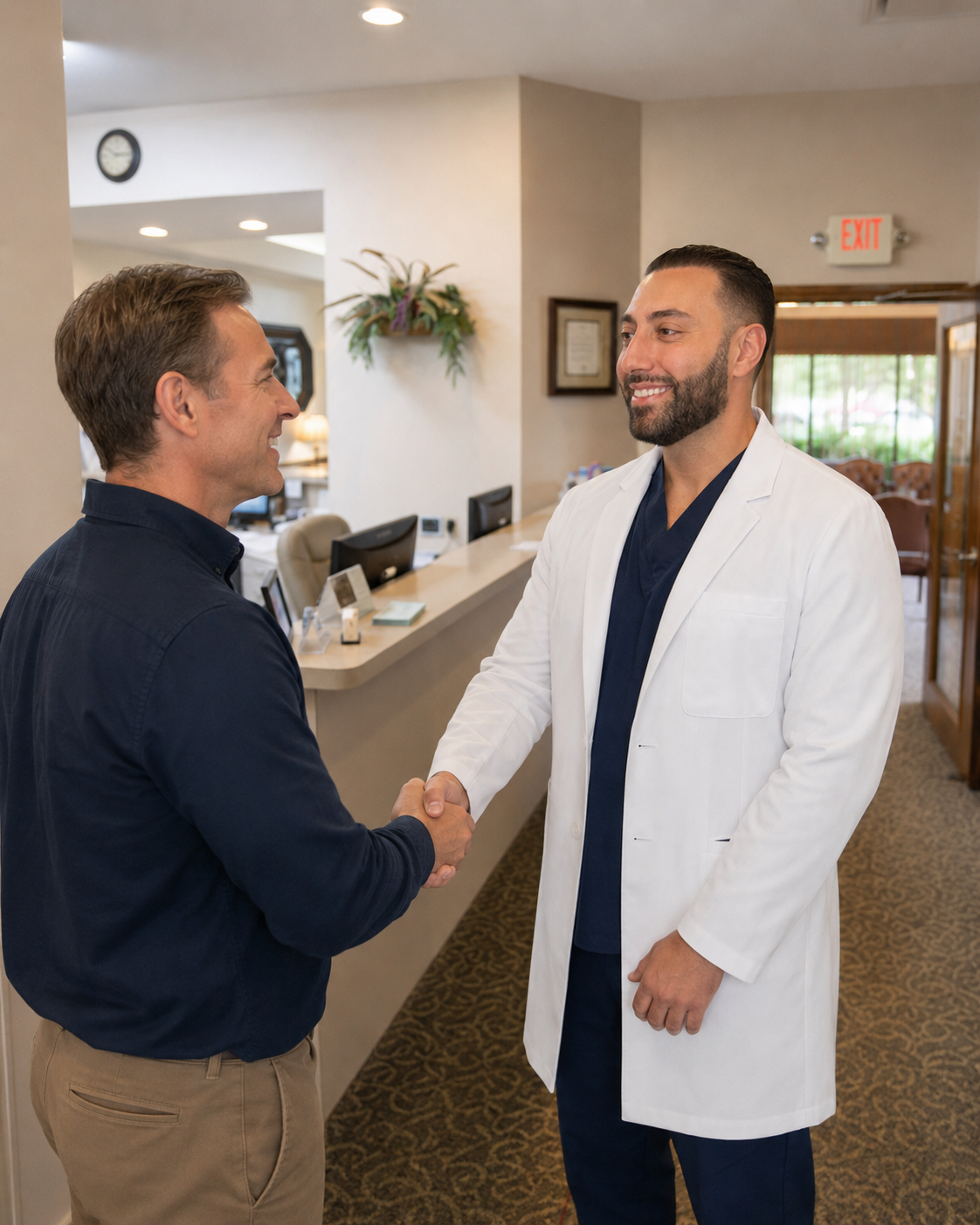
This office genuinely cares about their patients. I came in anxious and left feeling completely at ease. Everyone from the front desk to the hygienist to Dr. Kroni was warm, professional, and thorough. The office is clean and modern and I never felt like I was being rushed or oversold on anything. Five stars without hesitation.
Crystal H.
Had my wisdom teeth removed here and honestly it was way less stressful than I expected. The team checked in on me throughout the whole procedure and made sure I was comfortable before they started. Dr. Khaddor was calm and efficient and recovery was smooth. Really glad I chose C. Patrick Gray, DDS.
Kayla S.
C. Patrick Gray, DDS. was the first dentist office I have been to that actually took the time to listen. I have always been anxious about dental work and Dr. Kroni was so patient with me every step of the way. He saved two teeth other dentists told me to pull. I walked out with my confidence back. Cannot recommend them enough.
Melissa P.
I love that I can get everything done in one place. Had a cleaning, a filling, and a whitening consultation all within a few weeks without being shuffled around. Dr. Khaddor is genuinely one of the best dentists I have ever had. The whole team is warm and the office feels really welcoming.
Simone R.
I have been coming to C. Patrick Gray, DDS. for two years now and the consistency is what keeps me coming back. Same friendly faces, same thorough exams, and they always remember details from my last visit. Dr. Kroni is professional, knowledgeable, and never makes me feel rushed. Great practice.
Joshua A.
Switched to C. Patrick Gray, DDS. after moving to the Flint area and I am so glad I did. They went over my insurance up front so there were no surprises, and Dr. Kroni took the time to actually listen to my concerns instead of rushing through. Highly recommend if you are looking for a dentist who treats you like a person.
Sarah F.
Brought my two kids in for their first cleanings and the staff was wonderful with both of them. They explained each step so the kids knew what was coming and made the whole thing feel like a fun trip rather than a dental appointment. The office is clean, easy to find on Beecher Rd, and we always get in right on time.
Hubert H.
I had been putting off a crown for months because I was nervous. Dr. Khaddor took the time to explain everything before we started and made sure I was comfortable the entire time. The result looks completely natural and I have had zero issues since. I appreciate how honest the team is about what you actually need.
Jill J.
Dr. Kroni and Dr. Khaddor make every visit feel easy. They walked me through my treatment options without any pressure and answered every question I had. The whole team is friendly and the office runs on time. My family has been coming here for years and we would not go anywhere else.
Aaron D.
Stay Informed with Expert Insights & Tips About Dental Care

No Blog Posts Yet
We're working on new articles to help you care for your smile.
Check back soon for updates from C. Patrick Gray, DDS.
Schedule Your Appointment
Ready to take the next step? Contact C. Patrick Gray, DDS. in Flint to book your visit.
-
When You Can Visit
Monday: 8:00 AM – 5:00 PM
Tuesday: 8:00 AM – 5:00 PM
Wednesday: 8:00 AM – 5:00 PM
Thursday: 8:00 AM – 5:00 PM
Friday: 8:00 AM – 2:00 PM
Saturday: Closed
Sunday: Closed
- (810) 732-0200
Speak With Our Team
- G3222 Beecher Rd, Flint, MI 48532
Find Us Here

Thank you for booking your appointment!
We've received your request and will contact you soon to confirm the details. We look forward to seeing you at C. Patrick Gray, DDS.