
Back to Blogs

Dental Exam X-Ray Insurance Coverage Explained

Understanding dental X-ray insurance coverage, including types, frequency, and factors affecting benefits, empowers patients to make informed decisions for their oral health.

September 2, 2026
5 min read
Logan sits at a wooden desk, wearing a navy sweater, holding a phone to his ear with a concerned expression while looking at a laptop displaying a "Dental Insurance Policy" document. A coffee mug, papers, and pens are also on the desk.
Back to Blogs
Logan sits at a wooden desk, wearing a navy sweater, holding a phone to his ear with a concerned expression while looking at a laptop displaying a "Dental Insurance Policy" document. A coffee mug, papers, and pens are also on the desk.

Dental Exam X-Ray Insurance Coverage Explained

Understanding dental X-ray insurance coverage, including types, frequency, and factors affecting benefits, empowers patients to make informed decisions for their oral health.

September 2, 2026
5 min read

Understanding Dental X-Ray Coverage With Insurance

Dental X-rays are typically covered by most dental insurance plans, especially when deemed medically necessary for diagnosis and treatment planning during routine check-ups or for specific concerns. Coverage levels can vary significantly based on your specific plan, including factors like frequency limits, deductibles, and co-payments. Always verify with your provider to understand your individual benefits.

Regular dental examinations and X-rays are crucial for maintaining optimal oral health and detecting potential issues early. At C. Patrick Gray DDS in Flint, MI, Dr. Marcel Kroni emphasizes the importance of these diagnostic tools to provide comprehensive care. While many patients are aware of the need for these services, understanding how insurance covers them can sometimes be confusing.

Most insurance policies categorize dental X-rays as a preventive or diagnostic service. This often means a higher percentage of the cost is covered, sometimes even 100% for routine bitewings. However, full-mouth X-rays or more advanced imaging might fall under different benefit categories, leading to a lower coverage percentage or requiring a larger co-pay. Our team is here to help you navigate your benefits.
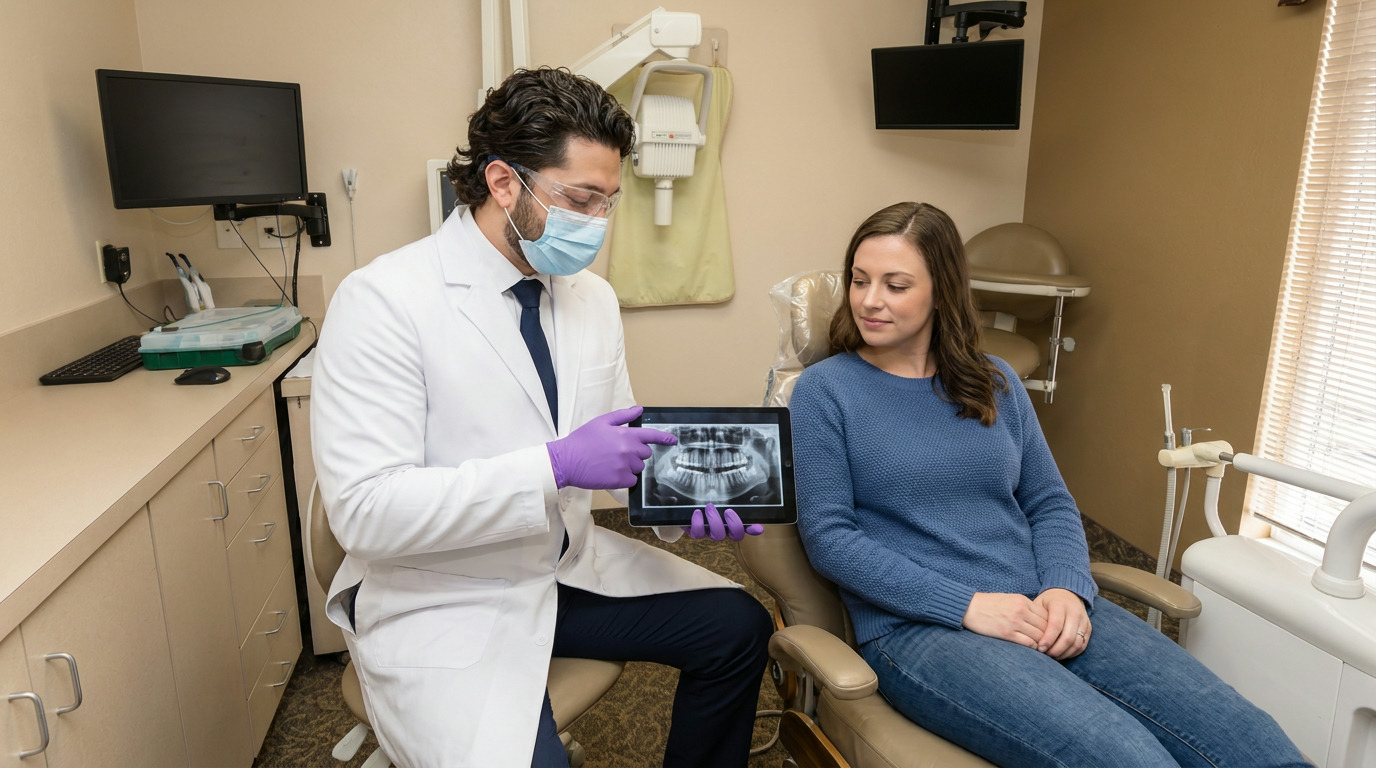

Dr. Marcel Kroni, wearing a lab coat, mask, and gloves, points to a dental X-ray on a tablet for Morgan, who sits in a dental chair in a clean operatory with dental equipment and a window with blinds.

What Types of Dental X-Rays Do Insurance Plans Cover?

Dental insurance plans commonly cover various types of X-rays, primarily those essential for diagnostic purposes during preventive exams or when addressing specific dental problems. These often include bitewing, periapical, and panoramic X-rays. The extent of coverage usually depends on the X-ray's necessity and the frequency specified by your plan.

Insurance policies are designed to support a range of diagnostic procedures necessary for good oral health. Dr. Marcel Kroni uses various X-ray types at C. Patrick Gray DDS to get a complete picture of your dental health, from the visible tooth surfaces to the underlying bone structure.

Here are common X-ray types and their typical insurance considerations:

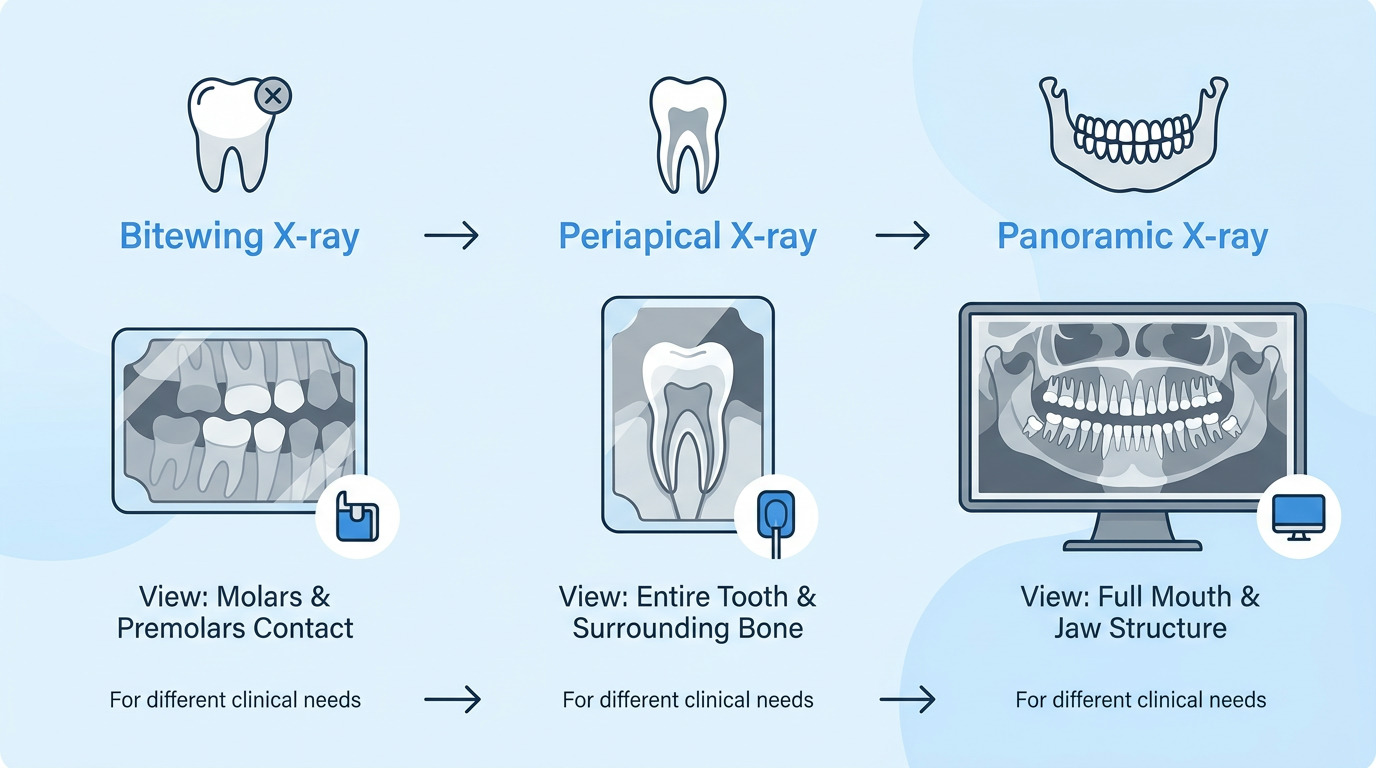
  • Bitewing X-rays: These are often taken annually or bi-annually during routine dental exams to check for cavities between teeth and to assess bone levels. They are usually covered well under preventive benefits.
  • Periapical X-rays: Used to view the entire tooth, from the crown to the end of the root, including the surrounding bone. These are typically covered when necessary to diagnose issues like infections or tooth fractures.
  • Panoramic X-rays: Provide a broad overview of the entire mouth, including all teeth, jaws, and surrounding structures. Insurance usually covers these less frequently, perhaps every three to five years, or for specific diagnostic needs like wisdom teeth evaluation or TMJ / TMD Treatment.
  • Full-Mouth Series (FMX): A complete set of bitewing and periapical X-rays providing a comprehensive view of all teeth. Coverage often aligns with panoramic X-rays, typically every few years.
A person's hands hold a dental insurance card and point at a laptop screen displaying an "Insurance Portal" form, with a blurred mug in the background.

How Often Are Dental X-Rays Covered by Insurance?

Dental insurance plans typically cover X-rays based on a frequency schedule, which varies significantly by policy. Routine bitewing X-rays are often covered annually or every two years, while full-mouth series or panoramic X-rays may be covered less frequently, such as every three to five years. Coverage is usually tied to the diagnostic necessity.

The frequency at which your dental insurance will cover X-rays is a critical aspect of your plan. It's not uncommon for patients to wonder why certain X-rays aren't covered annually. This is generally due to the insurance company's guidelines, which are often based on general dental health recommendations.

Here's a breakdown of typical coverage frequencies:

  • Routine Bitewings: Most plans cover these every 12 to 24 months. These are essential for detecting early signs of cavities and assessing bone health around the teeth.
  • Periapical X-rays: Coverage for these is usually determined by diagnostic need. If Dr. Kroni identifies a specific issue like a toothache or signs of infection, these will typically be covered.
  • Panoramic or Full-Mouth X-rays: These comprehensive X-rays are often limited to once every 3 to 5 years. They are crucial for assessing overall oral health, wisdom teeth positions, or before procedures like Dental Implants or Orthodontics.
  • Emergency X-rays: If you experience an accident or sudden pain, X-rays taken during Emergency Dental Care visits are generally covered, as they are deemed immediately necessary for diagnosis.
  • Pre-treatment X-rays: X-rays required before specific treatments, such as Tooth Extractions or Root Canal Therapy, are typically covered as part of the overall treatment plan, subject to plan benefits.
An infographic displays three types of dental X-rays: a bitewing X-ray showing molars and premolars, a periapical X-ray showing an entire tooth and surrounding bone, and a panoramic X-ray on a monitor showing the full mouth and jaw

Why Do Dentists Need X-Rays During Exams?

Dentists require X-rays during exams because they provide essential diagnostic information invisible to the naked eye. X-rays help detect cavities between teeth, assess bone health, identify infections, evaluate impacted teeth, and plan treatments like Dental Implants or orthodontics. They are crucial for comprehensive and preventive dental care.

X-rays are an indispensable diagnostic tool for dentists, including Dr. Marcel Kroni at C. Patrick Gray DDS. While a visual examination can reveal much about your oral health, it cannot uncover everything that might be happening beneath the surface of your gums or inside your teeth. X-rays serve as a window into these hidden areas.

For example, X-rays are the primary method for detecting interproximal cavities (cavities between teeth) long before they become visible or cause pain. They also allow Dr. Kroni to check the health of the bone supporting your teeth, which is crucial for identifying Periodontal Treatment needs. Without X-rays, many serious issues like cysts, tumors, or infections at the root tips could go unnoticed until they become advanced and more challenging to treat. They are also vital for planning complex procedures such as Oral Surgery or Full-Mouth Dental Implants.

A desk calendar with "Annual Check-up" circled on the 15th and "X-ray Review" circled on the 26th, next to a silver pen and tortoise-shell glasses, all on a dark gray surface.

Schedule Your Dental Exam at C. Patrick Gray DDS

If you're due for a dental exam or have questions about X-ray coverage, contact C. Patrick Gray DDS in Flint, MI. Our friendly team is ready to help you schedule an appointment with Dr. Marcel Kroni and clarify your insurance benefits. We are committed to providing exceptional care and transparent communication.

What Factors Influence Dental X-Ray Insurance Coverage?

Several factors influence dental X-ray insurance coverage, including your specific plan's deductible, co-payment, annual maximums, and frequency limitations. The medical necessity determined by Dr. Marcel Kroni, the type of X-ray, and whether the service is considered preventive or diagnostic also play significant roles in how much your insurance will cover.

Understanding the variables that impact your insurance coverage can help you anticipate costs and make informed decisions about your dental care. At C. Patrick Gray DDS, our team works diligently to help patients understand their benefits.

Key factors that influence coverage include:

  • Deductible: This is the amount you must pay out-of-pocket before your insurance plan begins to pay for services. Many preventive services, like routine X-rays, might be covered even before you meet your deductible.
  • Co-payment/Co-insurance: After your deductible is met, your plan might cover a percentage of the cost, leaving you responsible for the remaining co-insurance. Alternatively, a fixed co-payment might apply per service.
  • Annual Maximum: Most dental insurance plans have an annual limit on how much they will pay for your dental care within a policy year. Once this limit is reached, you are responsible for all further costs.
  • Frequency Limitations: As discussed, insurance plans set limits on how often certain X-rays or procedures are covered (e.g., once every year, every three years).
  • Medical Necessity: Insurance companies require that the X-rays are diagnostically necessary as determined by Dr. Kroni. If an X-ray is deemed cosmetic or not medically required, it may not be covered.
  • In-Network vs. Out-of-Network: Your coverage percentage might be higher if you visit a dentist within your insurance network compared to an out-of-network provider.
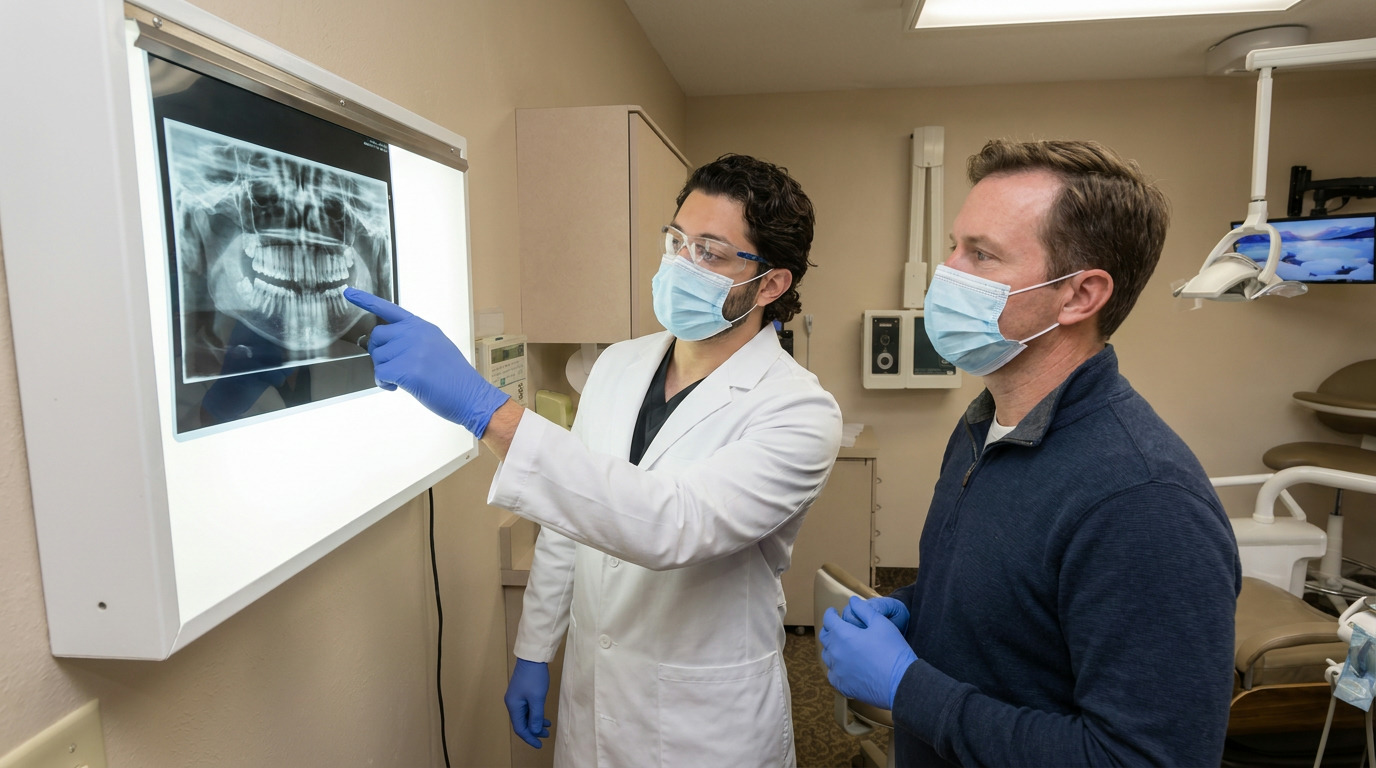
Dr. Marcel Kroni, wearing a white lab coat, safety glasses, face mask, and blue gloves, points to a panoramic dental X-ray on an illuminated light box while Carter, also wearing a face mask and blue gloves, looks on in a dental office.

What If My Insurance Doesn't Cover My Dental X-Rays?

If your dental insurance doesn't cover X-rays, it's crucial to discuss the reasons with both your insurance provider and C. Patrick Gray DDS. Possible reasons include exceeding frequency limits, not meeting your deductible, or the X-ray type not being covered. Our Flint, MI office can explore alternative payment options or financing solutions to ensure you receive necessary care.

It can be disappointing to learn that a necessary dental service like X-rays isn't fully covered by your insurance. However, this doesn't mean you should forgo the care recommended by Dr. Marcel Kroni. Oral health is integral to your overall well-being.

First, clarify the specific reason for the denial or limited coverage. Was it due to a frequency limitation? Have you reached your annual maximum? Is there a waiting period for diagnostic services? Our administrative team at C. Patrick Gray DDS can often assist you in understanding your Explanation of Benefits (EOB) and can communicate directly with your insurance company if needed. If coverage remains an issue, we are committed to making essential care accessible. We can discuss various financing options, such as payment plans, or help you understand how Health Savings Accounts (HSAs) or Flexible Spending Accounts (FSAs) might be used. Ensuring you receive timely diagnosis and treatment is always our priority.

A hand holds an Explanation of Benefits form, with a blurred calculator and a black pen resting on a wooden desk in the background near a window.

How Can I Maximize My Dental Insurance Benefits for X-Rays?

To maximize your dental insurance benefits for X-rays, understand your plan's specifics, including frequency limits and coverage percentages for preventive services. Utilize your plan's annual maximums, schedule regular preventive appointments, and ask C. Patrick Gray DDS to pre-authorize complex treatments. Our Flint, MI team can help you navigate your benefits effectively.

Making the most of your dental insurance benefits is key to managing your oral healthcare costs. Dr. Marcel Kroni and the team at C. Patrick Gray DDS encourage patients to be proactive in understanding their insurance policies.

Here are strategies to help you maximize your dental X-ray and overall benefits:

  • Understand Your Plan: Thoroughly review your policy document or contact your insurance provider directly to know your specific coverage, deductibles, co-pays, annual maximums, and frequency limits for X-rays and other services.
  • Schedule Regular Preventive Care: Consistency is crucial. By attending your recommended Dental Exams & X-Rays and Dental Cleanings, you can detect issues early, often when they are less costly to treat and more likely to be fully covered by insurance.
  • Utilize Your Annual Maximum: Many patients let their annual maximum reset without using all their benefits. Plan bigger treatments like Dental Crowns or Implant-Supported Dentures strategically over two policy years if possible, to spread costs and maximize coverage.
  • Pre-authorization for Major Procedures: For extensive treatments, ask our office to submit a pre-authorization to your insurance company. This provides an estimate of what your plan will cover before treatment begins, preventing unexpected out-of-pocket costs.
  • Keep Your Information Updated: Ensure C. Patrick Gray DDS always has your current insurance information. Incorrect details can lead to claim delays or denials.
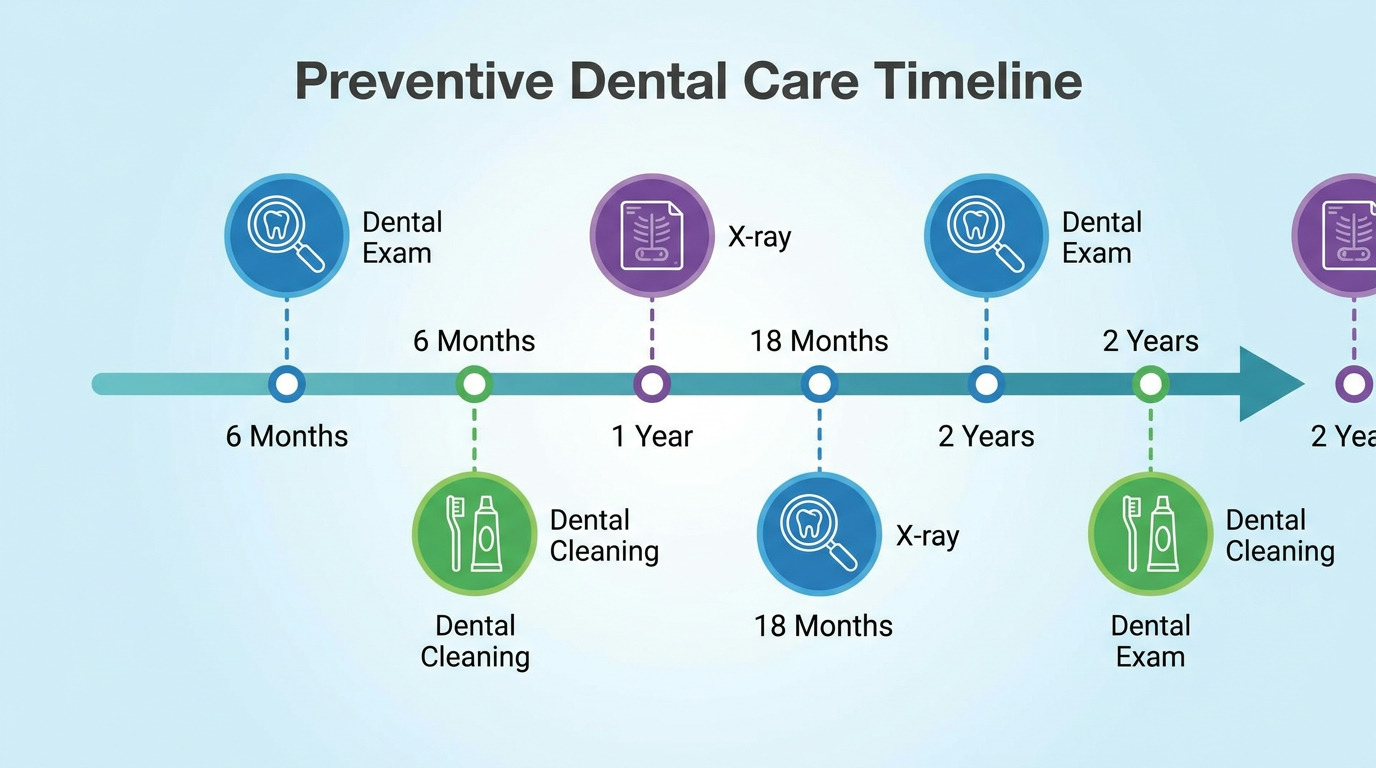
An infographic displays a horizontal timeline of preventive dental care milestones, including dental exams, X-rays, and dental cleanings, at intervals of 6 months, 1 year, 18 months, and 2 years.

What This Means for Your Next Dental Exam in Flint, MI

For residents of Flint, MI, understanding your dental insurance coverage for X-rays is an important part of your oral health journey. At C. Patrick Gray DDS, Dr. Marcel Kroni and our dedicated team believe that clarity regarding financial aspects empowers you to make the best decisions for your smile. X-rays are not just an add-on; they are a fundamental component of a comprehensive dental exam, allowing for early detection of issues that can prevent more extensive and costly treatments down the line. Whether it's identifying a hidden cavity, assessing bone health for Periodontal Treatment, or planning for future Dental Implants, X-rays provide the invisible insights necessary for tailored, effective care.

We encourage you to bring your insurance information to your appointment, and our knowledgeable staff will be happy to assist you in understanding your benefits. We aim to ensure you receive the highest quality of care without unnecessary financial surprises. Don't let questions about insurance deter you from getting the essential diagnostic services you need. Prioritize your oral health by scheduling your regular check-up and X-rays with us. We're here to support your journey to a healthy, vibrant smile in Flint.

A dentist in a white lab coat and blue tie stands gesturing to a seated woman in a navy top who is looking at a brochure in a modern waiting room with light brown walls and chairs.
Categories:
No items found.

Frequently Asked Questions

1. Is a full mouth X-ray covered by insurance?
Yes, a full mouth X-ray (FMX) is typically covered by dental insurance, though often with frequency limitations, such as once every three to five years, depending on your specific plan.

2. How often can I get bitewing X-rays covered?
Most dental insurance plans cover bitewing X-rays annually or every two years, considering them a crucial part of routine preventive care for detecting cavities between teeth.

3. Will insurance cover emergency dental X-rays?
Yes, X-rays taken during an emergency dental visit are generally covered by insurance, as they are deemed necessary for diagnosing immediate pain or injury.

4. What is a deductible in dental insurance?
A deductible is the amount you must pay out-of-pocket for dental services before your insurance plan begins to contribute to the costs.

5. Does a panoramic X-ray count against my annual maximum?
Yes, the cost of a panoramic X-ray typically counts towards your dental insurance plan's annual maximum, like most other covered dental procedures.

6. Can C. Patrick Gray DDS check my X-ray coverage?
Yes, our team at C. Patrick Gray DDS can help you understand your insurance benefits and estimate your X-ray coverage when you provide us with your policy information.

7. Why do dentists need X-rays if I don't have pain?
X-rays are vital for detecting problems like hidden cavities, bone loss, or infections that are not yet causing pain but require early intervention to prevent worsening.

8. Is there a waiting period for X-ray coverage?
Some dental insurance plans may impose a waiting period for certain diagnostic services, including specific types of X-rays, before coverage becomes active.

9. What if my insurance denies X-ray coverage?
If coverage is denied, discuss the reason with your insurer and our office. We can explore payment options or alternative solutions to ensure you receive necessary care.

10. Are X-rays covered under preventive dental care?
Many routine X-rays, particularly bitewings, are often covered as part of preventive dental care, sometimes with a higher percentage of coverage or without a deductible.

Schedule Your Appointment

Ready to take the next step? Contact C. Patrick Gray, DDS. in Flint to book your visit.

  • When You Can Visit

    Monday: 8:00 AM – 5:00 PM

    Tuesday: 8:00 AM – 5:00 PM

    Wednesday: 8:00 AM – 5:00 PM

    Thursday: 8:00 AM – 5:00 PM

    Friday: 8:00 AM – 2:00 PM

    Saturday: Closed

    Sunday: Closed

  • Speak With Our Team

    (810) 732-0200
  • Find Us Here

    G3222 Beecher Rd, Flint, MI 48532

Thank you for booking your appointment!

We've received your request and will contact you soon to confirm the details. We look forward to seeing you at C. Patrick Gray, DDS.

Oops! Something went wrong while submitting the form.

Stay Informed with Expert Insights & Tips About Dental Care

9.2.2026

Dental Exam X-Ray Insurance Coverage Explained

Logan sits at a wooden desk, wearing a navy sweater, holding a phone to his ear with a concerned expression while looking at a laptop displaying a "Dental Insurance Policy" document. A coffee mug, papers, and pens are also on the desk.
9.2.2026

Understanding dental X-ray insurance coverage, including types, frequency, and factors affecting benefits, empowers patients to make informed decisions for their oral health.

9.2.2026

Spotting the Signs You Need a Dental Cleaning by C. Patrick Gray DDS

Maya stands at a kitchen sink, filling a silver water bottle from the faucet, with potted plants on the windowsill behind her. A blue floss pick rests on the wooden counter next to a dirty plate and a mug.
9.2.2026

Recognizing signs like bleeding gums, bad breath, or rough-feeling teeth indicates it's time for a professional dental cleaning to maintain oral health.

9.1.2026

Your Child's Dental Health Timeline Explained

Jacob, wearing a teal linen shirt, stands in a kitchen holding a white toothbrush and a tube of toothpaste, looking at the camera.
9.1.2026

Ensure your child's dental health journey starts strong with C. Patrick Gray DDS, from first tooth to lifelong healthy smiles.

SPECIALS

Your Best Smile Starts {{si}}Today{{/si}}

IMPLANTS
 $ 2,750
Everything Included: Implant + Abutment + Crown
BRIDGES
Starting at:
$ 2,200
CLEAR ALIGNERS
$ 4,000
24-month financing available
$ 167/month
Retainers included
OUR LOCATION

Get Directions to Our Dental Clinic in Flint, MI